
Angel no. 14
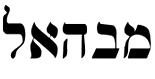
Mebahe'el
«I understand how to bring order to life»
Mebahe'el accompanies the period from 27 to 31 May and belongs to the Cherubim. Its motto is «I understand how to bring order to life». In this symbolic portrait, the main strength is a sense of justice: recognising abuse, defending a right and seeking an order that makes people's lives freer.
When you follow this disposition, you can find courage, initiative and a clear direction. If you witness a wrong and force yourself to remain indifferent, or silently endure what you consider unjust, the inner conflict can become heavy. Your strength needs a concrete response, however small, consistent with what you believe is right.
Yet applying a rule simply because it exists is not enough for you. You may see the law as a still incomplete attempt and feel a need to discuss it, improve it or overcome its limits through debate. Personal initiative and difficulty tolerating rigid authority can make you impatient in roles that ask only for execution. The task is to give form to justified criticism without mistaking your judgement for permission to impose it on everyone.
Dante Alighieri's Divine Comedy evokes the freedom to place even the powerful, kings and popes within a moral order independent of their position. Walt Whitman brings the theme into the poetry of democracy. Isadora Duncan expresses it in dance, seeking a freedom of the body that goes beyond observing academic forms alone.
John F. Kennedy represents a public gesture affirming solidarity and dignity across a political boundary. John Wayne and Clint Eastwood bring into cinema the independent avenger who sees a wrong and decides to confront it. In this portrait, these figures show the strength of the gesture while raising the question of limits for someone who feels personally charged with restoring justice.
You may want to be at the centre of attention and experience hierarchy as an obstacle partly because it gives others the leading part. The risk is beginning to see yourself as a misunderstood hero. The conviction that you are defending a value becomes resentment towards those who do not follow; disappointment turns into contempt for people. You may withdraw, complain constantly or imagine a small salvation for yourself alone, leaving the rest of the world to pay for its mistakes.
In a harsher form, the sense of justice can turn into its opposite. Punishing those who disappointed you, bending a rule in your favour or exploiting others' trust seems legitimate retaliation. Mary Tudor represents, on the dark side of the portrait, power that uses an ideal to justify repression. Declared intentions do not erase what your actions do to people.
This is why humour has an important value. It lets you see things out of proportion without turning every disagreement into a final battle, and recognise where you too fall short of the ideals by which you measure others. Being able to laugh at yourself reduces the distance between who you are and the image of someone who must always be right.
Gilbert K. Chesterton represents irony linked to the search for truth and justice. Ian Fleming brings elements of lightness into the world of his agent 007, also engaged in fighting an enemy. Patch Adams evokes another form of closeness: humour enters the relationship with someone suffering and makes the encounter of care more human. A smile has meaning when it does not belittle pain.
Mebahe'el's direction is to defend a value while continuing to examine how you do it. You can protest, study, propose and support someone suffering a wrong without becoming the sole judge of other people's lives. Justice stays alive when it includes respect, the ability to correct yourself and a willingness not always to take yourself seriously.