
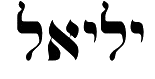
Angel no. 2
Yeliy'el
«I rise among those who see»
Yeliy'el accompanies the period from 26 to 31 March and belongs to the Seraphim. Its motto is «I rise among those who see». In this symbolic portrait, the gift is clarity of mind: understanding, bringing order and making sense of what seems confused within a group. The name also evokes a voice that makes itself heard in an assembly.
You can become someone others turn to because you reason methodically, assess before acting and explain without losing the thread. You do not necessarily seek command in order to be admired. Often it simply seems reasonable to you that decisions should go through someone who has studied the problem and can justify them.
This trust in the mind also shapes your relationship with yourself. You may identify so closely with your intelligence that you see emotions, instincts and desires as things to direct from above. Descartes represents this connection between thinking and feeling that you exist particularly clearly: reason becomes the place where you recognise your identity.
Paul Verlaine brings the authority of a poet who proposes principles and rules for his art into this portrait. Teresa of Ávila evokes another use of the same precision: carefully observing and describing mystical experience, including its bodily and emotional aspects. These are examples of a mind that wants to understand even what seems hardest to explain.
This disposition can find expression in teaching, philosophy, culture and technology. You may feel at home in design, architecture, engineering or setting the direction of an organisation. When you can address an audience, the same clarity may lead you to guide a movement or take responsibility within a community.
The risk is turning an ability into a measure of human worth. You may look down on people who live more emotionally, judge anything that does not follow your method as confusion and seek distinction in everything: language, habits, home, clothes and tastes. The pursuit of refinement becomes isolation when its main purpose is to avoid resembling other people.
The need for originality can also become rigid. A choice loses its freedom if you reject it simply because it is common, or defend it because it makes you feel part of an exclusive circle. Your clarity is at its best when it helps people understand, rather than deciding who deserves to be heard and who does not.
Meanwhile, the body and emotions do not cease to exist. If control is the only way you make room for them, the desire for intense sensations can grow. One part of you remains cautious and fears ridicule; another may seek increasingly risky adventures or extreme experiences to feel what it has kept at a distance. Extreme mountaineering and desert rallies represent, in this portrait, the search for an intensity strong enough to interrupt the mind's dominance.
Nikolaj Gogol' and Vincent van Gogh give form to the more painful side of the conflict between control, suffering and the relationship with the body. Their place in this portrait represents tension pushed to breaking point, rather than a talent that must pass through torment to become authentic.
Francisco Goya offers a different direction. He brings unease, fears and dark images into his works, observes them and makes them visible. Reason encounters what it cannot fully govern instead of trying to erase it. Art becomes a place where clarity can expand to understand the less orderly parts of experience too.
You can cultivate this balance through writing, drawing, music or a physical activity that truly interests you. Climbing on routes suited to your level or dancing offers experiences of attention and presence without having to seek danger. Yeliy'el's direction is to use the mind as a guide that can listen: thought, body and feelings can all take part in the same life.