
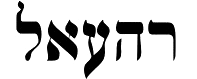
Angel no. 39
Raha'e'el
«I lead towards the invisible, and move beyond illusions»
Raha'e'el belongs to the Powers and accompanies the period from 4 to 8 October. The motto «I lead towards the invisible, and move beyond illusions» introduces the conflict between the wish to be daring and the fear of leaving what you know.
Your gift is to understand resistance to change. You can relate to the difficulty of someone who both desires and fears freedom. This sensitivity can help you guide, create, teach or care for others within your area of competence. It becomes clearer when you recognise the same conflict in your own experience.
The main obstacle is dependence on the past and on authority figures. You may stay in the home, occupation or beliefs you inherited as though every departure concealed a danger. The problem is not continuing a family business: it is giving up the possibility of changing it even when you want to. Louis Lumière represents precisely the possibility of starting from an existing line of work, photography, and opening a new path in cinema.
You may also try to change and feel overwhelmed. Opportunities arrive too quickly, goals remain unclear and no choice seems to take firm shape. In seeking stability, you then risk turning to command: giving orders makes you feel strong, or obeying someone relieves you of the burden of deciding. In both cases, the security may be only apparent.
Juan Peron appears in this portrait as a reminder of the search for control; Vladimir Putin and Heinrich Himmler evoke the risk of placing your abilities at the service of a system of power. You can recognise the danger of leaving every judgement to authority and learn to retain responsibility for your actions even within a group you belong to.
This conflict can enter family life too. If an aspiration of your own remains unfulfilled, you may want to realise it through your children and experience their refusal as a wound. Their path cannot make up for yours. Recognising a disappointment allows you to address it without passing it on to those you love, and to see desires and abilities that differ from your own.
A valuable part of your talent is making a difficult experience possible to communicate. In Lumière's example, the moving image evokes the possibility of giving an emotion visible form and sharing it. Having suffered the same problem is not enough to help someone: listening, appropriate tools and, where care is concerned, professional training are needed.
Denis Diderot connects knowledge of your own conflicts with an understanding of social ills and relationships between generations, explored in fiction and drama too. Le Corbusier, in turn, evokes the attempt to free living spaces from past models. In this portrait, transforming an environment and understanding a relationship are different ways of seeking a less confined life.
The path requires self-observation. You may notice that attachment to your parents or the need to control your children conceals a desire for reliable direction. A guide, including a spiritual guide if that is part of your life, can offer discussion and perspective; the next step is to develop standards you can recognise and take personal responsibility for, without depending forever on someone else's approval.
Freedom becomes more concrete when you choose something that can benefit you and others and take responsibility for that choice. You do not have to face everything at once: you can step back from a habit, shape a project of your own and tolerate the absence of immediate family approval. Raha'e'el's courage lies in taking part in your own life, keeping your affections without letting them determine every direction.